> For the complete documentation index, see [llms.txt](https://valuevaults.gitbook.io/value-docs/llms.txt). Markdown versions of documentation pages are available by appending `.md` to page URLs; this page is available as [Markdown](https://valuevaults.gitbook.io/value-docs/guides/how-does-it-work.md).
# How does it work
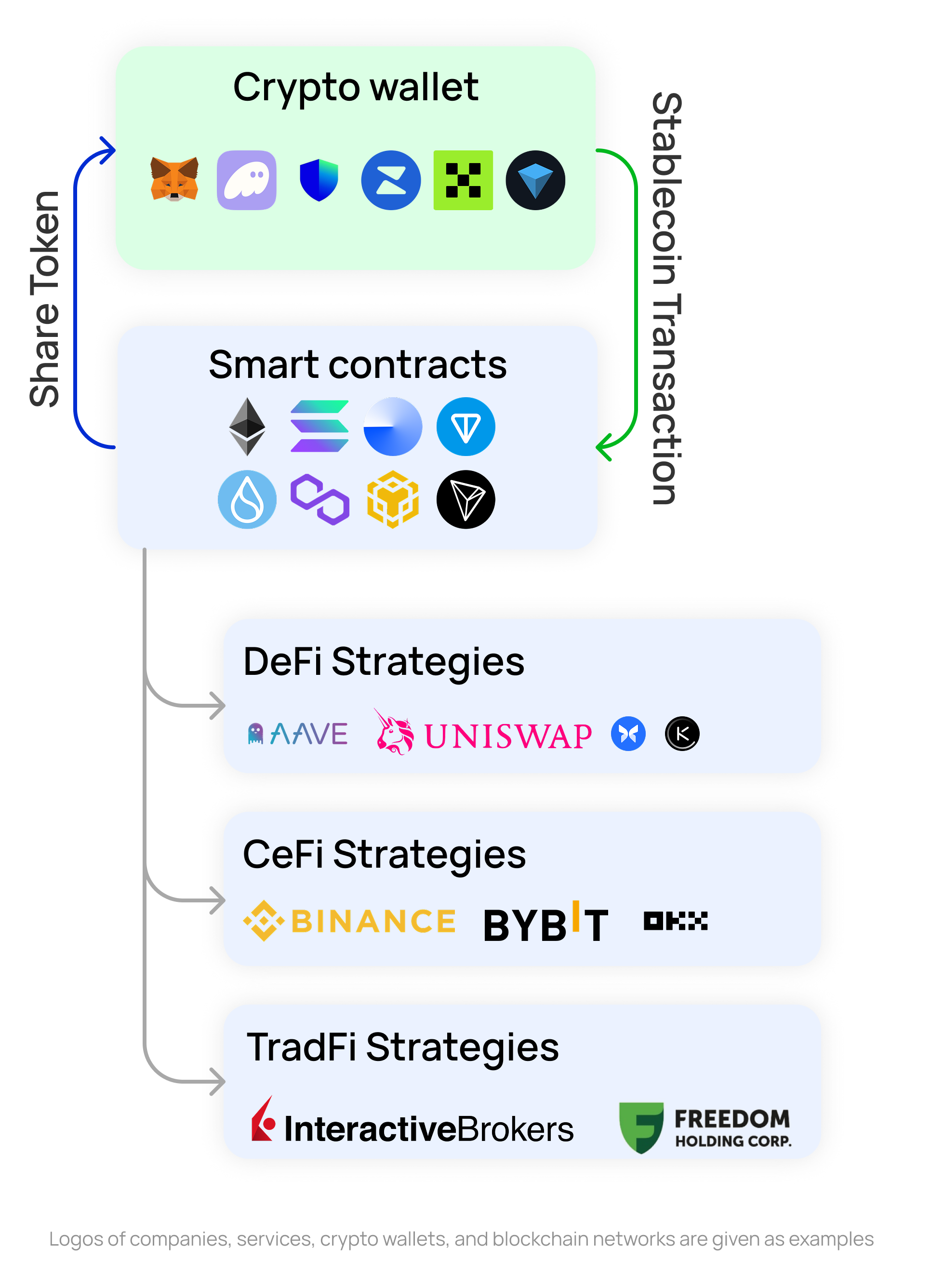
At Value, we seamlessly bridge blockchain infrastructure, CeFi services, DeFi protocols, and the traditional banking and brokerage ecosystem, giving our clients access to a wide range of investment opportunities
**Step 1.** The user selects an investment product on the platform and transfers stablecoins to a smart contract. In exchange, the user receives a share token representing ownership
**Step 2.** Smart contract and custody managers execute operations with users assets according to specific investment strategies. Assets may be allocated to decentralized protocols or converted to fiat currency for further investment in securities, derivatives, or alternative investment products
**Step 3.** The user can monitor the investment process in a [personal account](/value-docs/guides/investor-account.md), initiate additional deposits or withdrawals, and reallocate funds between products as needed. The platform regularly conducts audits and verifies all off-chain reserves to ensure transparency and reliability
### Vault Types
Value operates two types of vaults, each designed for different strategy profiles. **Synchronous vaults** use fully on-chain accounting, where deposits and withdrawals are settled instantly at the current share price, making them ideal for liquid, on-chain strategies. **Async vaults** are designed for strategies that require off-chain capital deployment, such as algorithmic trading or hedge fund allocations: deposits are priced against a NAV reported by an oracle, while redemptions follow an epoch-based settlement process, ensuring that liquidity is returned to investors only when the strategy has fully unwound the necessary positions.